
Key takeaways
- Isolation, not lack of skill, money, or opportunity, is one of the biggest reasons dreams die quietly in capable people.
- Humans evolved to work in tribes. The loneliness that shows up while you're carrying a dream alone isn't dramatic, it's accurate.
- The people who love you most are often not the right sounding board, because their love makes them protective rather than helpful.
- By some estimates, nearly three in four women are considering a career change, and a huge part of why so few act on it is that they're carrying the idea in complete silence.
- There's no single right way to get support, solo with structure, in a group, or one-on-one. The best option is the one you'll actually do.
If you've been carrying your dream alone for years, quietly protecting it from anyone who might dismiss it, that isolation is very likely a bigger obstacle than the dream itself. Isolation lies. Community reveals truth. The fears that feel unanswerable in an empty room get reframed the moment you say them out loud to the right person, and choosing some form of support, solo with structure, group, or one-on-one, matters more than choosing the "correct" one.
Why does loneliness kill more dreams than lack of skill or money ever does?
Loneliness kills dreams because when you're carrying an idea entirely alone, every doubt sounds reasonable and every setback feels like a final verdict, with no one to reframe it. It has nothing to do with whether you're capable enough to succeed.
Most people carrying a long-held dream have been thinking about it alone, worrying about it alone, protecting it from being seen by anyone who might dismiss it, alone. The loneliness slowly becomes part of how the dream feels in the body. Heavy. Private. Almost embarrassing. Something you wouldn't bring up at dinner.
That isolation is one of the biggest reasons dreams die quietly in capable people. Not lack of skill. Not lack of money. Not lack of opportunity. Loneliness. And it's worth being honest about the scale of it: by some estimates, nearly three in four women are considering a career change right now, and a large part of why so few of them ever act is that they're sitting with the idea in complete silence, with no one to test it against.
Is it normal to feel like you need other people to actually make this change?
Yes, and it's not a personal weakness, it's how humans have always operated. We've never, in hundreds of thousands of years, done anything important entirely alone, and the part of you that feels lonely carrying a dream in isolation is responding accurately, not dramatically.
Our ancestors didn't hunt alone, raise children alone, build shelters alone, or survive winters alone. The lone hero is a modern story we tell ourselves, but the truth is we evolved to work in tribes. Your nervous system knows this even when your culture tells you self-reliance is the goal.
Isolation lies. Community reveals truth. Alone with your dream, your fears echo in an empty room and every doubt gets the last word. In the right company, the same fears come into the light and you hear, "yeah, I felt that too." The same doubts get challenged by people who can see what you can't. The dream that felt impossible at the kitchen table starts to feel possible the moment you say it out loud to the right person.
Why aren't the people who love you most always the right people to talk to about this?
The people who love you most are often not the right sounding board because their love makes them protective, and protection tends to sound like caution dressed up as support, which quietly takes the wind out of your sails.
This is worth saying carefully, because it's true and it can feel uncomfortable to hear. Your partner, your siblings, your old friends, your parents, the people who've known you for decades, love you genuinely and want you safe and happy. That's exactly the problem. When you bring them your dream, they don't hear "this is the thing that lights me up." They hear "my person is about to do something risky and I'm scared on their behalf." So they tell you it's a great idea but maybe wait. They tell you it's wonderful but have you thought about the money. They aren't being unkind. They're being protective in the way they've been protective of you for years. But protective isn't the same as helpful when what you actually need is someone to help steer the boat forward, not back.
What helps alongside the people who love you is people walking a similar journey. People who've already been afraid of the same things and decided to act anyway. Samantha, a public speaking coach who couldn't communicate her own value when she started, has spoken about exactly this kind of support making the difference, describing the enthusiasm and encouragement around her as infectious, the kind of energy that pulled her forward rather than holding her back.
What are the actual options for getting support with this?
There are three genuine paths, working through it solo with structure, doing it in a small group, or doing it one-on-one, and none of them is objectively better. The right one is whichever fits how you actually work and how much support you want around you.
The first option is doing it on your own, with a notebook and the framework already laid out. If you're the kind of person who works best alone, this is a completely valid path. You move at your own pace and keep your dream as private as you want for as long as you want.
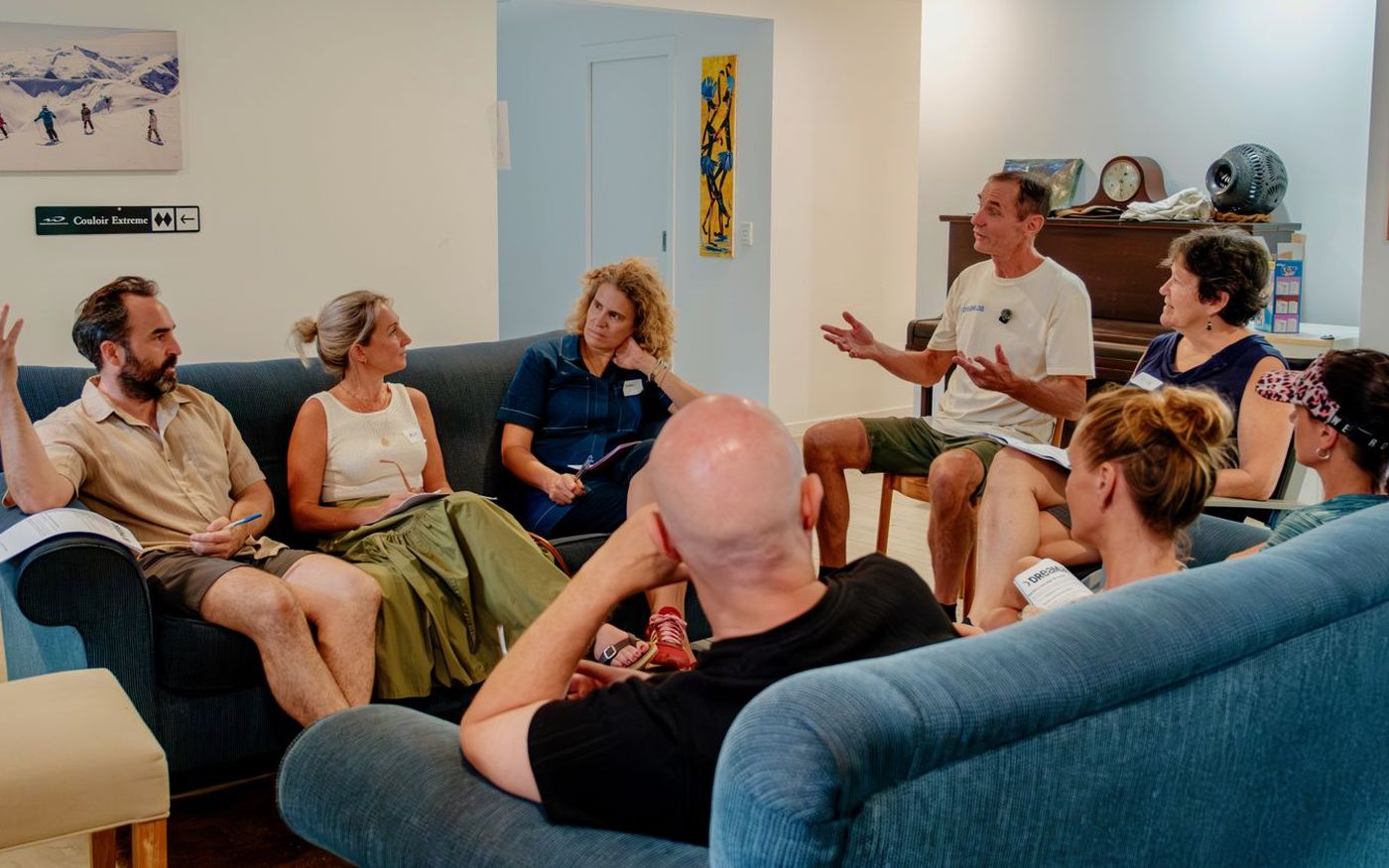
The second option is working through it with a small group of people walking a similar journey, in a structured course. You sit with the same questions together, hear someone else say the thing you were too embarrassed to admit, and watch other people's experiments unfold alongside your own. Real progress tends to happen faster because the structure of the group keeps everyone moving and the energy of others makes the hard questions easier to face.
The third option is working through it one-on-one, with the pace and shape built entirely around your specific dream and situation. Weekly if you want momentum, monthly if you need space to test things between conversations. Nicky Maidment, who started writing her book after coaching, described the value of this kind of tailored support directly, saying she hadn't really owned her worth until she did the work, and calling Mike "a genius for pulling out your strengths", strengths she wouldn't have found alone.
None of these is better in the abstract. What matters is that you stop trying to figure this out entirely by yourself, in silence. That version has been failing for years, quietly, without you necessarily noticing it was failing.
What does real community actually look like in practice?
Real community doesn't require a platform, a subscription, or anything formal, it just requires showing up regularly with people who get what you're going through, and it works because hearing someone else say the thing you've been thinking makes you feel less alone in your own life.
A few years ago, a Friday morning walk started here in Noosa. Every week, a group gathers for an early walk, then coffee. Different ages, different stages, different lives. Each week one person shares some of their wisdom. The rest walk, listen, talk, and drink coffee afterward. Nothing fancy. No subscription. No platform. Just a Friday morning that has nothing to do with anyone's email signature.
Years on, it's still going, and what keeps it going isn't the format. It's that almost every Friday, someone hears another person share something that makes them feel less alone. Someone else has been thinking about leaving the job. Someone else is questioning the direction. Someone else is sitting with a dream they're not sure they can pull off. The conversations on the walk back to the cafe are often the most useful conversations of the week, because they're with the right kind of company. Not just friends. Not just family. People walking a similar path.
A vine grows up a tree. Without the tree, the vine never reaches the light. The vine is doing the growing. The tree is doing the holding. Neither could be what they are without the other. Your dream is the vine. Community is the tree. You're not handing your dream over to anyone else. You're using the structure of the right people to climb toward something you couldn't have reached alone. This is exactly why Dream Lab exists as a community, not just a set of ideas on a page. The vine still has to grow. It just doesn't have to grow in isolation.
So here's your work this week. Pick the path. Solo with the questions and your own notebook. A small group walking the journey alongside you. Or one-on-one support shaped entirely around your dream. Whichever path you pick, the most important thing is that you pick one. The trying to figure it out alone version has had its run, and it hasn't been getting you closer to the dream. You don't have to do this alone. You never did. You just got into the habit of trying. The lab is open.